'Negative Association' and my take on it
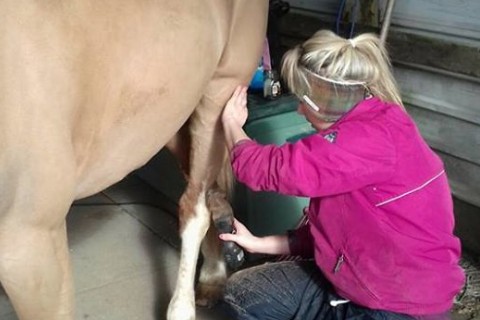
When it comes to clipping, as this picture displays, we often have to get very up close and personal with your horse, putting ourselves in 'the danger zone'. As you can imagine, this can be quite risky and dangerous. Which is why technique and horsemanship skills are imperative for the safety of not only the horse and clipper, but also handlers that are present at the time. During the first few minutes of arriving to clip a horse, i use this time wisely to assess and to get to know the horse as much as possible. I will tailor my handling to suit the horse stood in front of me. It is very useful at this point if a horse owner can be as honest as possible in order for me to have a 'heads up' on the particular temperament of the horse; for example if he's had a recent injury that may make him act out of character? Does he dislike being touched on a particular area of his body? Horses have a very common trait in which memory of a past injury or pain, or bad handling, leaves a long lasting association, even if the pain itself has gone and an injury healed, it doesn't take much to disturb the memory of pain and in turn evoke fear. This becomes a 'learned' behaviour.
And this here is where many problems lie. A bit like how a scar damages tissue and leaves a mark. The memory in the brain leaves a ‘path’ .. once we walked a path it becomes familiar, until the path is intercepted one way or another it will remain the same or possibly worsen. I will often pick up on past injury for example to a hock, or a shoulder, or stifle, even if its not visually evident, their reaction and anticipation often says everything you need to know. I also believe the majority of horses can be worked with and come back to full confidence, some learn quicker than others.... but ultimately most horses can and will come back from 'negative associations', if we are willing to put the time and effort in. Melody Hames